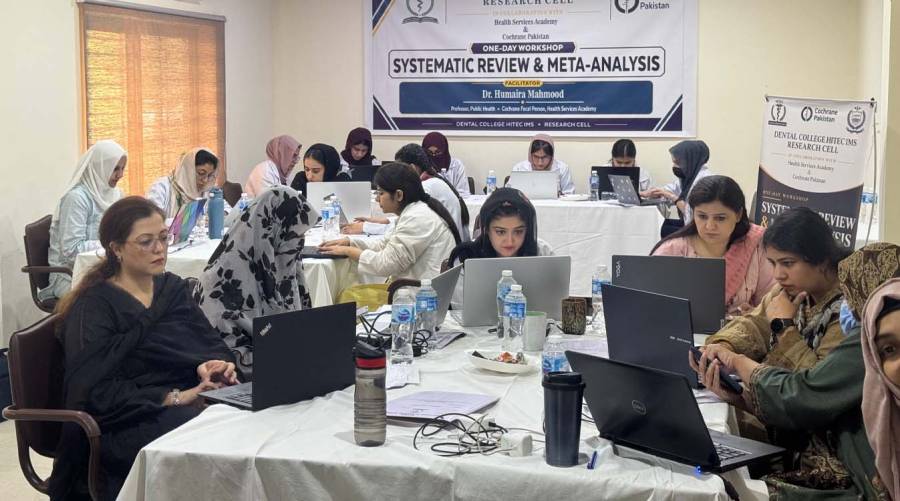
TAXILA: Dental researchers and students need more than access to published studies to make evidence-based decisions. They must also be able to assess the quality of available research, identify patterns across studies and distinguish reliable findings from evidence that may be affected by bias.
That was the focus of a workshop on systematic reviews and meta-analysis organised by the Research Cell of HITEC-IMS Dental College, where 21 participants explored research methods used to bring together and evaluate scientific evidence.
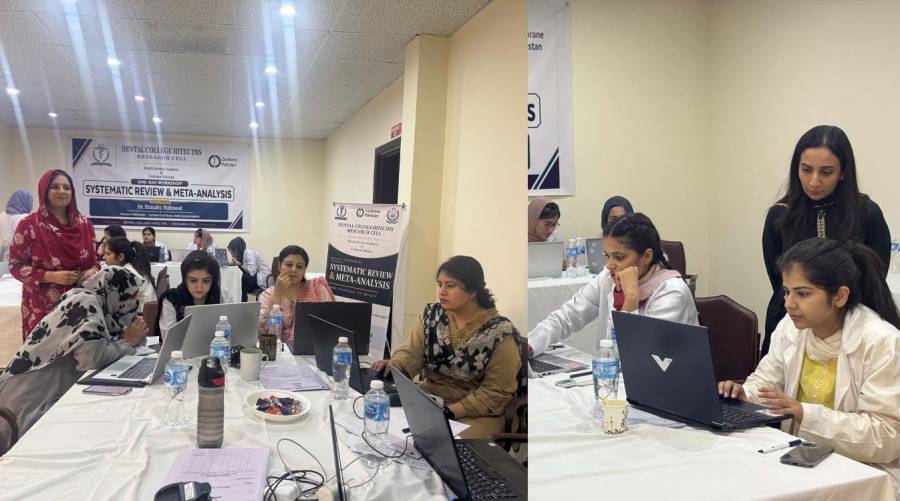
Dr Humaira Mehmood of the Health Services Academy (HSA), who also serves as a Cochrane Focal Person, led the workshop, combining explanations of research methodology with practical demonstrations designed to help participants understand the process of evidence synthesis.
Systematic reviews and meta-analyses are widely used in healthcare research to assess findings from multiple studies. A systematic review follows a structured approach to identifying, selecting and evaluating relevant research, while a meta-analysis uses statistical methods to combine results when the available studies and data make this appropriate.
For dental professionals, these methods can help researchers assess evidence on clinical interventions, compare treatment outcomes and identify gaps in existing knowledge. The reliability of the conclusions, however, depends on the quality of the underlying studies and the methods used to select, analyse and interpret the evidence.
During the workshop, participants explored how to develop focused research questions, prepare literature reviews and apply the Preferred Reporting Items for Systematic Reviews and Meta-Analyses (PRISMA) guidelines.
The session also introduced participants to research search engines and strategies for locating relevant studies, an essential step in ensuring that a review captures the available evidence rather than relying on a limited or selectively chosen set of publications.
Practical demonstrations focused on Review Manager (RevMan), software used to prepare and analyse systematic reviews, particularly in healthcare research. Participants were introduced to data analysis, the generation and interpretation of forest plots, and the assessment of potential bias in included studies.
Forest plots provide a visual way to examine the results of individual studies alongside a combined estimate, where a meta-analysis is appropriate. Assessing potential bias is equally important because weaknesses in study design, conduct or reporting can affect how confidently researchers interpret the findings.
The interactive format gave participants opportunities to discuss methodological concepts, ask questions and work through practical exercises. The workshop was intended to strengthen their understanding of evidence synthesis and provide skills they could apply in future research.
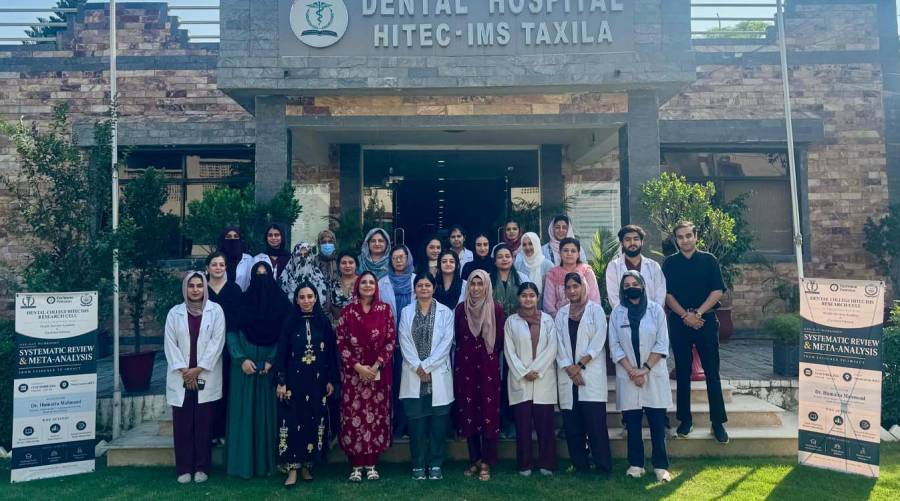
At the conclusion of the session, Dr Beenish, Dean of Clinical Sciences at HITEC-IMS Dental College, presented a shield to Dr Humaira Mehmood on behalf of the college in recognition of her contribution and facilitation.
The workshop was organised by the Research Cell under the leadership of Dr Maria Rabbani, Head of the Research Cell, Dental College, HITEC-IMS.
The initiative highlights the role of research training in dental education, where the ability to critically evaluate scientific literature is an important part of developing evidence-based clinical practice. For students and early-career researchers, familiarity with systematic review methods can also provide a foundation for research projects, academic writing and future postgraduate work.
Stay connected with Dental News Pakistan
CLICK HERE TO FOLLOW Dental News Pakistan on WhatsApp and stay connected for the latest dental education and career updates, student achievements, campus activities, research developments and important news from Pakistan's dental community.