LAHORE: Students hoping to pursue dentistry in Punjab now have a clearer picture of the road to admission after the provincial government formally notified its MBBS and BDS admission policy for the 2026–27 academic session, confirming dental seat allocations, eligibility requirements, merit rules and a separate admission timetable for public-sector BDS programmes.
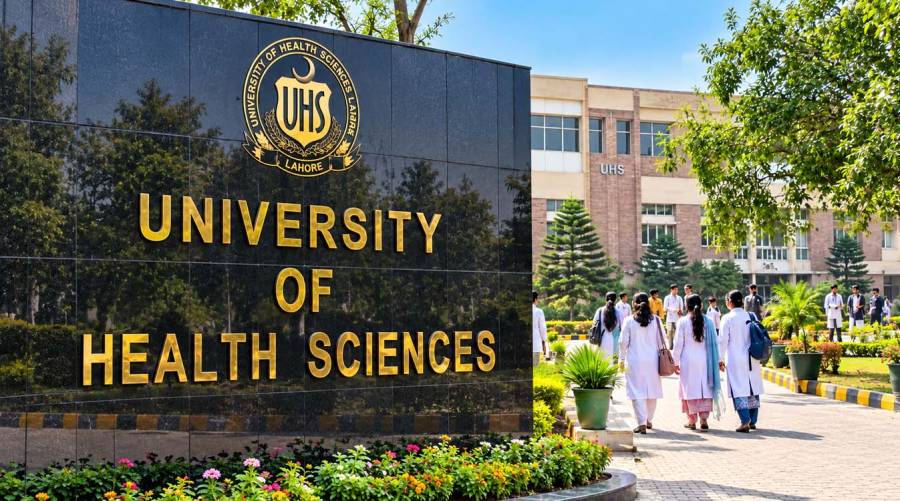
The notification, issued by the Punjab Specialized Healthcare and Medical Education Department on October 14, places the University of Health Sciences (UHS), Lahore, in charge of centralised admissions to public and private medical and dental colleges.
For prospective dental students, the announcement brings several important decisions into focus: whether their academic record meets the minimum requirements, how they should rank their preferred institutions, and what financial commitments they must be prepared to meet if they receive an admission offer.
The accompanying UHS public-sector admission notice schedules BDS applications from December 15 to 30, 2026, with dental classes expected to begin on March 1, 2027.
Punjab lists 1,100 private BDS seats across 18 colleges
One of the most significant figures in the admission notification concerns the number of places available at private dental institutions.
According to the official allocation, 1,100 BDS seats have been listed across 18 private dental colleges in Punjab for the upcoming academic session.
The institutions are located across several cities, including Lahore, Rawalpindi, Multan, Faisalabad, Sialkot, Sheikhupura, Sargodha and Lodhran.
The approved intake figures listed for individual private dental colleges range from 50 to 75 seats, providing prospective applicants with a starting point for evaluating their options.
Among the institutions named in the allocation are FMH College of Medicine and Dentistry, Lahore Medical and Dental College, Rashid Latif Dental College, Watim Dental College, Margalla Institute of Health Sciences and other private institutions offering dental education.
The same provincial notification lists 4,400 MBBS seats across 33 private medical colleges, taking the combined private-sector MBBS and BDS allocation to 5,500 seats.
For the public sector, UHS has identified four dental institutions in its admission notice: de'Montmorency College of Dentistry, Lahore; Nishtar Institute of Dentistry, Multan; Dental Institute, Punjab Medical College, Faisalabad; and the dental college at Quaid-e-Azam Medical College, Bahawalpur.
The public-sector seat allocations remain subject to the relevant regulatory approvals. Applicants should consult the final UHS prospectus and approved college-wise intake before treating any listed seat figure as a guaranteed admission opportunity.
What BDS applicants need to qualify
The provincial policy establishes a minimum 50 per cent MDCAT passing score for BDS admission, compared with 55 per cent for MBBS.
However, passing the entrance examination alone will not secure a place at a dental college.
Candidates must also have obtained at least 60 per cent marks in FSc Pre-Medical, HSSC or an equivalent recognised 12th-grade qualification.
Biology and Chemistry must form part of their qualifying subjects, together with either Physics or Mathematics.
Applicants presenting equivalent qualifications must fulfil the applicable equivalence requirements, including certification by the Inter Boards Coordination Commission (IBCC), where required.
The policy further specifies that MDCAT results remain valid for three years from the date of the examination, in accordance with applicable regulatory requirements.
For students comparing medical and dental career paths, the difference between the qualifying MDCAT thresholds is particularly relevant. A candidate meeting the BDS threshold but falling below the MBBS requirement may still satisfy the dental programme's minimum MDCAT condition, provided all other eligibility requirements are met.
How will BDS merit be calculated?
Competition for dental college places will be determined through the same academic weighting formula used for MBBS admissions.
The notified merit calculation is:
- MDCAT examination: 50 per cent
- FSc Pre-Medical/HSSC or equivalent: 40 per cent
- Matriculation/SSC or equivalent: 10 per cent
This means half of a candidate's admission aggregate will come from MDCAT performance, making the entrance examination a major factor in determining merit position.
The remainder will be drawn from higher-secondary and secondary academic results.
The policy also confirms that additional marks will not be awarded for Hafiz-e-Quran status, consistent with the applicable regulatory framework and judicial ruling.
Candidates should distinguish between minimum eligibility and competitive merit. Securing the required qualifying marks allows an applicant to be considered, but admission ultimately depends on aggregate merit, available seats, eligible admission categories and institutional preferences.
BDS admissions to open in December; first merit list due in January
Dental applicants have a different application calendar from MBBS candidates under the UHS public-sector admission notice.
Online BDS applications are scheduled to open at 9am on December 15, 2026, and close at 5pm on December 30, 2026.
The provisional merit order is scheduled for January 6, 2027, followed by the final merit order on January 9.
The first college-wise BDS selection list is expected on January 11, 2027.
Further selection and upgradation lists are scheduled for January 15 and January 21, allowing vacant seats to be filled according to merit and the preferences submitted by eligible candidates.
Dental classes are scheduled to commence on March 1, 2027.
For comparison, public-sector MBBS applications run from October 16 to October 30, 2026, with medical classes scheduled to begin on February 1, 2027.
The published timetable is subject to subsequent directions from the Pakistan Medical and Dental Council (PMDC) and the Punjab government.
Importantly, these dates relate to the public-sector admission notice. Candidates seeking private dental college admission should follow the separate private-sector schedule issued by UHS rather than assume that the same application window applies.
Private dental college applicants face Rs600,000 initial deposit
Alongside merit requirements, the financial conditions attached to admission are likely to be a major consideration for prospective BDS students and their families.
Under the notified policy, candidates selected for private-sector medical or dental colleges must deposit Rs600,000 in the designated UHS bank account within three working days of the publication of the relevant merit list.
The payment is required to secure the offered admission seat.
Candidates who fail to deposit the prescribed amount within the specified period will lose their admission offer, and the vacant seat may be allocated to another eligible applicant according to merit.
The initial deposit will subsequently be transferred to the concerned institution following completion of the admissions process.
Any remaining fee must be paid directly to the college, with the policy allowing tuition payments on a quarterly, six-monthly or annual basis under the applicable regulations.
For public-sector MBBS and BDS students, annual tuition has been fixed at Rs50,000, excluding students admitted against overseas or foreign quota arrangements and any separately applicable charges.
UHS will also charge a non-refundable Rs2,000 application processing fee. Candidates applying for both MBBS and BDS are required to submit separate applications.
For families considering private dental education, understanding the initial deposit requirement is especially important because an admission offer alone does not secure a seat without payment and completion of the prescribed joining formalities.
College preference lists could decide where students study dentistry
Beyond examination scores and seat availability, the policy places considerable importance on the order in which applicants choose their colleges.
Candidates must enter their institutional preferences through the UHS online admission system.
Those applying to public-sector institutions must arrange the available colleges according to their preferred order, while the policy does not restrict the number of private-sector institutions that an applicant may select.
However, the rules contain an important condition: any institution left out of a candidate's preference list will not be considered for admission or subsequent upgradation.
Although candidates may edit their applications before the submission deadline, the number and order of college preferences cannot be changed once the application period closes.
This makes the selection process more than a formality.
Students considering dentistry will need to weigh institutional preferences against practical factors such as location, affordability, living arrangements and their willingness to accept a particular college.
The policy provides for successive merit and selection lists through which vacant seats may be offered to eligible candidates according to merit and submitted preferences.
Private-sector students may also elect to give up their right to subsequent upgradation when joining an institution. Once exercised, this option cannot be reversed.
Reserved seats and overseas admission arrangements
The admission framework includes provisions for students applying against reserved and special admission categories.
These cover eligible candidates with disabilities, applicants from notified under-developed districts, Cholistan residents and candidates seeking admission through specified arrangements involving other provinces and regions.
The notification also addresses overseas Pakistani and dual-national applicants, as well as candidates admitted through designated foreign admission arrangements.
Private-sector medical and dental colleges may reserve up to 15 per cent of their annual intake for eligible overseas Pakistani or dual-national expatriate candidates.
If seats reserved under that category remain vacant because of a lack of eligible applicants or other reasons, they must be transferred to open merit, with the relevant fee structure applying.
In public-sector institutions, candidates admitted against overseas Pakistani quota seats are required to pay US$10,000 annually under the self-financing arrangement.
Overseas Pakistani applicants who secure ordinary open-merit seats, however, are required to pay fees applicable to Pakistani students.
The detailed policy also establishes additional documentation and assessment requirements for specific reserved categories. Students applying under any such arrangement should examine the relevant eligibility provisions rather than rely solely on the general admission criteria.
Admission process to remain online
UHS will administer the centralised process through its online admissions system, using separate application arrangements for MBBS and BDS.
Applicants will be required to provide their personal and identification details, academic qualifications, MDCAT information and supporting documentation.
These documents may include Matriculation and HSSC certificates, identity records, domicile certificates and equivalence documents, where applicable.
Candidates applying against reserved categories must also submit the supporting evidence required for their respective admission category.
Once the required details have been entered, applicants must select their preferred colleges, generate the admission processing fee challan and complete the prescribed payment and final submission procedures.
UHS has warned that incomplete applications or failure to meet the notified requirements may result in rejection.
Successful candidates must subsequently fulfil the joining and payment requirements applicable to their allotted institution.
What the new policy means for future dentists
For students aiming to enter the dental profession, the 2026–27 policy establishes a clear framework for admissions while underlining the competitive and administrative challenges involved in securing a place.
The 50 per cent MDCAT qualifying threshold provides a defined minimum for BDS eligibility, but academic performance, college preferences and seat availability will ultimately determine where successful candidates are offered admission.
The December application window also gives prospective public-sector BDS candidates a distinct admission timeline, separate from the earlier MBBS process.
For private dental college applicants, early financial planning will be essential, particularly because the initial Rs600,000 deposit must be paid within a short period following selection.
Candidates are strongly advised to consult the official notification, monitor UHS announcements and review institutional preferences carefully before submitting their applications.
The complete admission policy, relevant prospectus and official notices can be accessed through the University of Health Sciences Lahore website at https://www.uhs.edu.pk/.
Stay connected with Dental News Pakistan
Don't miss important BDS admission announcements, dental college merit lists, PMDC regulations and updates affecting the future of dental education in Pakistan.
CLICK HERE TO FOLLOW Dental News Pakistan on WhatsApp for timely news, policy developments and admission-related updates.