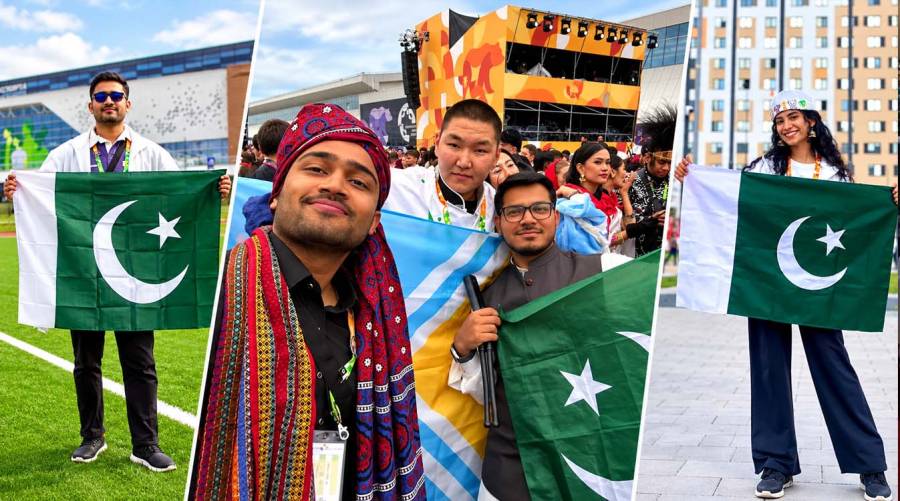
YEKATERINBURG, RUSSIA: For three young Pakistanis from dentistry, travelling to Russia for one of the world’s largest international youth gatherings was not simply about representing the country abroad. It became an opportunity to look closely at how healthcare is changing — and to ask what some of those changes could realistically mean for oral healthcare back home.
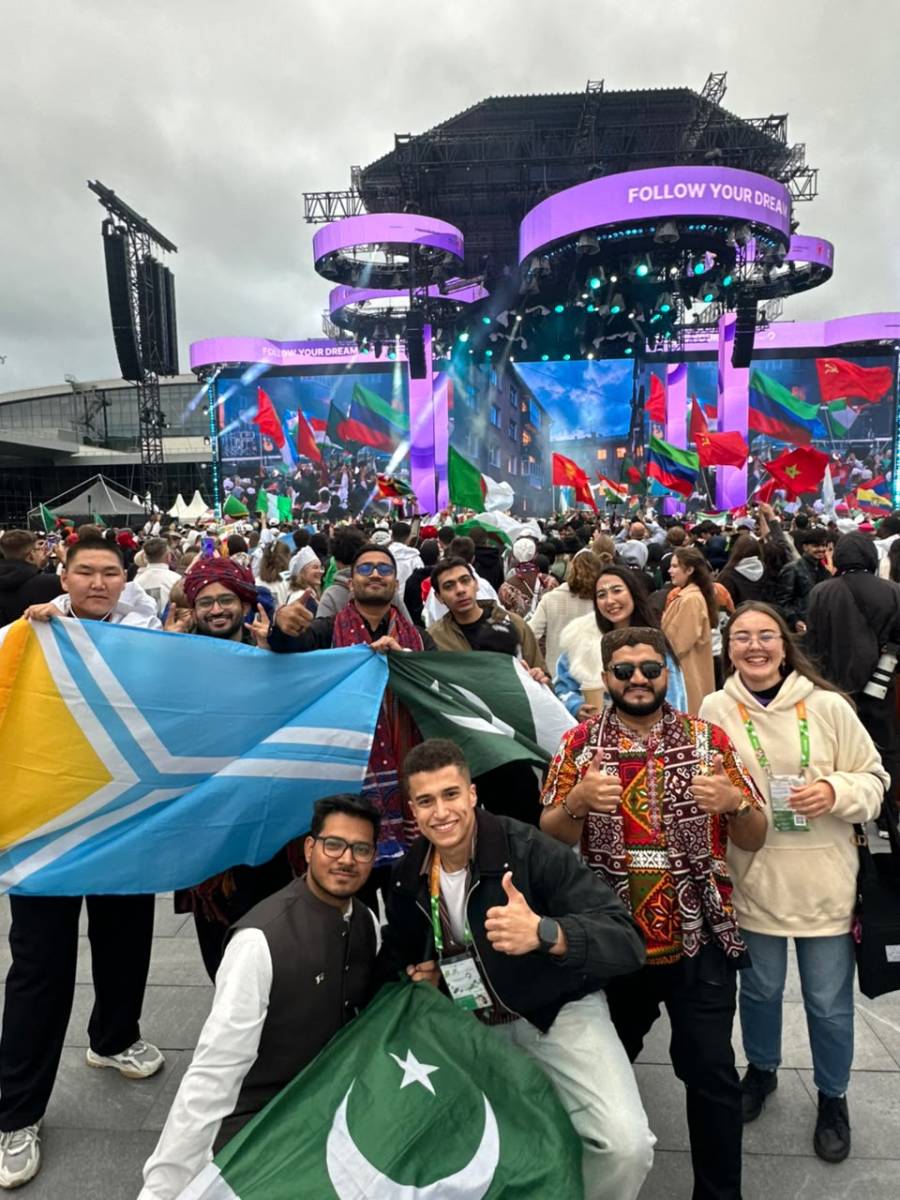
Jaint Kumar of Altamash Institute of Dental Medicine, Karachi; Ahmad Haseeb of Multan Medical and Dental College; and Noor Ul Anne Koraishie of Peshawar Dental College were selected through a competitive, fully funded process to participate in the International Festival of Youth 2026 (IFY 2026), held in Yekaterinburg from September 11 to 17.
They joined a gathering of 10,000 young participants from 191 countries, selected from more than 113,000 applications worldwide. Official festival figures show that half of the participants came from outside Russia, making the event a particularly diverse platform for international dialogue, professional exchange and collaboration.
For the three dental participants, however, the value of that international exposure lay in looking beyond the conventional boundaries of dental education.
The festival programme spanned health, technology, education, digital services and other areas linked to future development, giving participants access to exhibitions, discussions, professional sessions and interactive learning opportunities. The Pakistani dental delegates focused particularly on healthcare, science, innovation and entrepreneurship-related activities, seeking ideas that might have relevance for a country where access to timely oral healthcare remains uneven, particularly outside major urban centres.
One of the most significant healthcare sessions they attended was delivered by Mikhail Murashko, Minister of Health of the Russian Federation, under the title “Healthcare in Russia: Prevention, Innovation, and Healthy Longevity.”
The official programme described how Russian healthcare is being shaped by new medicines, domestically developed medical equipment and digital solutions intended to identify health risks earlier and make healthcare more accessible across different regions. The session also explored the translation of scientific advances into practical tools for clinicians and the growing importance of prevention in improving health outcomes.
For young professionals trained in dentistry, the discussion carried a wider message: healthcare does not necessarily have to begin when disease is already advanced enough to require complex treatment.
That idea has particular resonance in oral health, where delayed diagnosis can mean that preventable or manageable problems are first addressed only after pain, infection or extensive tissue damage has occurred.
The delegates also engaged with interactive healthcare activities, practical learning sessions, medical panels and first-aid simulations during the festival. Rather than treating those experiences as models that could simply be copied in Pakistan, they used them to consider what might be achievable within local realities — particularly in communities where specialist dental services are limited.
One area of discussion was whether low-cost smartphone technologies and appropriately validated artificial intelligence tools could eventually assist with basic oral-health screening, risk recognition or referral in remote settings.
The delegates said another major takeaway was the emphasis on prevention and early intervention. Their discussions with international participants explored how community-based health systems can encourage people to seek care earlier and how education, technology and structured referral can support that shift.
For dentistry in Pakistan, prevention does not necessarily require expensive infrastructure. Oral-health education, regular screening, recognition of risk factors and timely referral can all form part of a more preventive approach — particularly when communities have limited access to restorative or specialist treatment.
Their participation also extended beyond healthcare.
IFY 2026 included a substantial cultural programme designed to bring young people from different countries into closer contact through exhibitions, music, art, food, traditional activities and shared experiences. The festival’s World Cultures District, for example, was created specifically as a space for participants from 191 countries to experience and exchange cultural traditions.
The Pakistani participants took part in cultural exchanges, interacted with delegates from different regions, exchanged souvenirs and shared elements of Pakistani culture and identity with their international peers.
For the dental trio, those encounters also created opportunities to form professional and academic connections beyond the formal programme.
The challenge now is translating what they saw and discussed into ideas that make sense within Pakistan’s own healthcare realities.
That may ultimately be the most useful lesson the three young dental professionals brought home.
Their experience does not, by itself, change dentistry in Pakistan.
But it can widen the questions young dental professionals are willing to ask — about how oral disease can be prevented earlier, how underserved populations can be reached more effectively, and how technologies developed around the world might be adapted responsibly rather than adopted blindly.
For Pakistan’s emerging dental community, that kind of exposure may matter as much as the journey itself.
Because the real value of representing Pakistan internationally begins after coming home — when global ideas are tested against local needs and turned, where possible, into practical solutions for the people who need them most.
Stay connected with Dental News Pakistan
CLICK HERE TO FOLLOW the official Dental News Pakistan WhatsApp Channel to stay connected with the issues shaping your education and career. Follow the Dental News Pakistan WhatsApp Channel for dental education updates, research news and student opportunities.