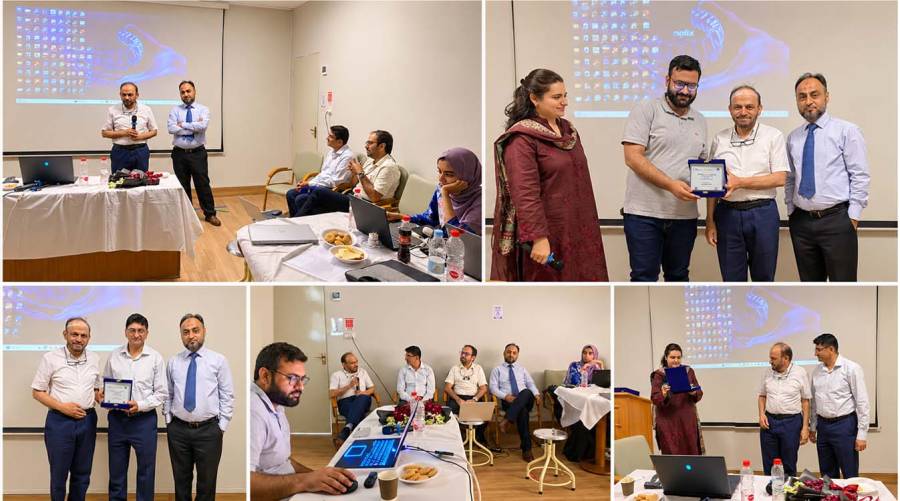
LAHORE: Planning corrective jaw surgery on a computer before entering the operating theatre is becoming an increasingly important part of modern dental and maxillofacial practice. At Fatima Memorial College of Dentistry, postgraduate trainees recently explored how digital technology can help surgeons assess complex jaw problems, plan surgical movements and translate those plans into customised surgical splints.
The Department of Orthodontics, in association with the Pakistan Association of Orthodontists (PAO), recently organised a one-day workshop titled “Digital Workflows in Orthognathic Surgery: From Virtual Planning to Surgical Splint Fabrication”.
The programme brought together postgraduate trainees in orthodontics and oral surgery for clinical case discussions and practical software training, introducing them to the digital techniques increasingly used in planning corrective jaw procedures.
Led by Prof. Dr. Muhammad Imran Rahbar, Head of the Department of Orthodontics, the workshop focused on connecting three essential stages of the surgical process: understanding a patient's three-dimensional anatomy, planning the intended jaw movements virtually and preparing the digital designs used in surgical splint fabrication.
The training aimed to help young dental specialists understand not only how these technologies work, but also how they fit into clinical decision-making and interdisciplinary treatment planning.
Understanding the shift towards digital jaw surgery
Orthognathic surgery, commonly known as corrective jaw surgery, is performed to address significant jaw discrepancies that may affect a patient's bite, facial alignment and oral function.
Such procedures often require close coordination between orthodontists and oral and maxillofacial surgeons. Before surgery, clinicians must assess how the upper and lower jaws relate to each other and determine the movements needed to achieve the planned result.
Traditionally, this planning has relied heavily on radiographs, dental casts and physical model surgery.
Digital workflows add another dimension by allowing clinicians to examine anatomical structures in three dimensions, simulate planned jaw movements and design surgical splints using computer-based tools.
These splints help transfer aspects of the planned jaw positioning into the surgical procedure.
For postgraduate trainees, learning the complete process is important because digital planning involves more than operating software. It requires an understanding of anatomy, occlusion, treatment objectives and the clinical limitations of each case.
Faculty-led discussion connects theory with clinical cases
The workshop opened with a recitation from the Holy Quran, followed by a welcome address from Prof. Dr. Abid Ashar, Principal of FMH College of Dentistry and an oral and maxillofacial surgeon.
Prof. Ashar emphasised the importance of keeping dental and surgical education aligned with technological developments and incorporating contemporary approaches into clinical practice.
The academic sessions began with a case-based discussion led by Prof. Dr. Muhammad Imran Rahbar, supported by faculty members Associate Professor Dr. Mariyam Masood, Assistant Professor Dr. Saba Sikandar and Senior Registrar Dr. Muhammad Uzair of the Department of Orthodontics.
Using clinical cases as the starting point, the faculty engaged participants in discussions about diagnosis, treatment considerations and the decisions involved in planning orthognathic surgery.
The interactive format also allowed trainees to raise questions and examine how orthodontic preparation and surgical planning must work together when treating complex jaw discrepancies.
From 3D anatomical models to virtual surgical planning
A central feature of the workshop was its practical, software-based training.
Under the guidance of Dr. Aminullah, the workshop's software facilitator, participants were introduced to importing STL files and performing anatomical segmentation, two important steps in preparing digital models for surgical assessment.
STL files are commonly used to represent three-dimensional dental surfaces, while anatomical segmentation helps identify and separate structures within digital imaging data for closer assessment.
The hands-on exercises then progressed to superimposition, anatomical landmark identification and three-dimensional orientation.
These techniques allow clinicians to examine the position and relationship of anatomical structures, compare relevant digital information and establish a reference for planning surgical movements.
The emphasis was on understanding how separate digital steps come together to form a connected planning process, rather than treating each software function as an isolated exercise.
Participants subsequently worked through practical case-planning activities, applying the concepts introduced during the earlier sessions.
How virtual plans become surgical splints
The afternoon programme moved from anatomical assessment and virtual planning to the next stage of the workflow: surgical splint fabrication.
Prof. Dr. Muhammad Imran Rahbar and Dr. Aminullah guided participants through the techniques involved in designing and preparing surgical splints from digitally planned cases.
In corrective jaw surgery, surgical splints can help guide the relationship between the jaws according to the treatment plan developed before the operation.
Digital planning allows clinicians to simulate intended changes in jaw position and use the resulting information to develop patient-specific splint designs.
These designs can subsequently be manufactured using appropriate digital fabrication methods, including three-dimensional printing.
The workshop's practical sessions helped trainees understand the connection between the planned surgical movements and the splint that may be used to guide their execution.
The programme therefore covered the progression from clinical assessment and digital modelling to virtual planning and splint design, providing an overview of how modern digital workflows can support orthognathic surgical preparation.
Why this training matters for postgraduate dentistry
The workshop comes as digital planning and computer-assisted manufacturing become increasingly relevant to orthodontics and oral and maxillofacial surgery.
Research into digital orthognathic workflows has examined how three-dimensional planning, virtual simulations and digitally fabricated splints can support the transfer of surgical plans into clinical procedures.
However, successful use of these technologies still depends on accurate diagnosis, sound clinical judgement, appropriate planning and effective coordination between the professionals involved.
For dental trainees, gaining practical experience with these systems during postgraduate education can help bridge the gap between conventional surgical principles and emerging digital techniques.
The Lahore workshop also reflects a broader focus on digital orthodontic training at Fatima Memorial College of Dentistry.
In October 2026, Dental News Pakistan reported that the institution had introduced an in-house clear aligner fabrication workflow, bringing digital treatment planning and appliance manufacturing into its educational and clinical environment.
While clear aligner fabrication and orthognathic surgical planning address different treatment needs, both involve the use of digital models, computer-assisted planning and the translation of virtual designs into physical dental appliances.
The latest workshop extends this learning approach into the more complex field of corrective jaw surgery.
For Fatima Memorial's Department of Orthodontics, the programme provided an opportunity to strengthen interdisciplinary education while introducing postgraduate trainees to the practical demands of digitally assisted surgical planning.
More broadly, it highlights a changing requirement in specialist dental education: future orthodontists and oral surgeons must be able to understand the digital workflow as a whole, from diagnosis and treatment planning to the preparation of devices used during clinical procedures.
Stay connected with Dental News Pakistan
CLICK HERE TO FOLLOW the official Dental News Pakistan WhatsApp Channel for the latest dental education news, clinical innovations, workshops, research developments and professional updates from Pakistan and beyond.