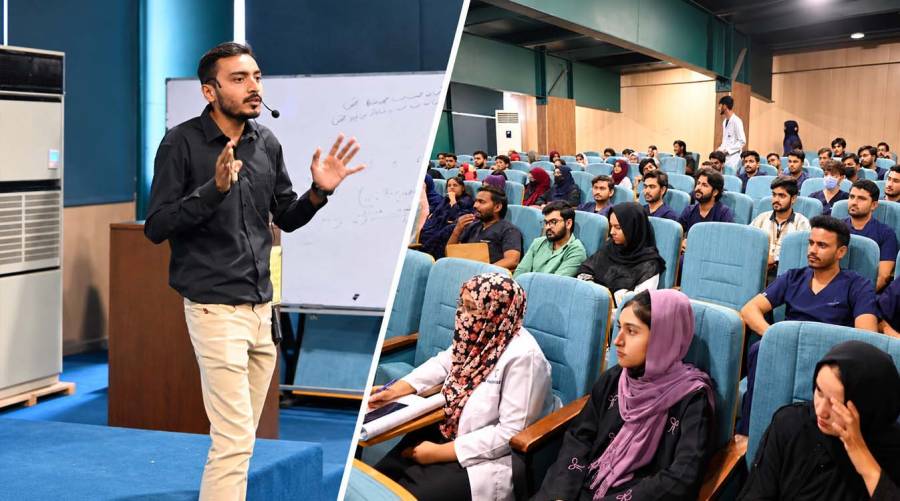
KARACHI: Liaquat College of Medicine and Dentistry (LCMD) has brought artificial intelligence (AI) into focus through an interactive faculty session exploring how emerging technologies can support healthcare practice, research and academic learning without compromising professional judgment or ethical responsibilities.
The open house titled “AI in Healthcare: The Road Ahead” combined practical demonstrations, interactive discussions and faculty feedback to examine the opportunities and challenges of integrating AI into healthcare and medical and dental education.
The session was facilitated by Dr Rizwan Hassan, with Dr Amna Afridi serving as co-facilitator. Dr Daniyal Najeeb and Dr Abdul Karim moderated the proceedings, encouraging constructive discussion and participation among faculty members.
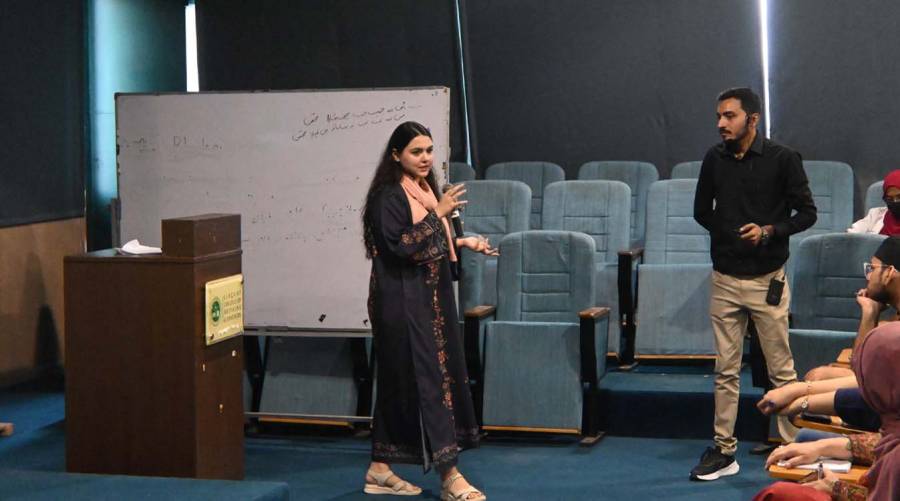
Rather than relying solely on conventional presentations, the session demonstrated how AI tools could assist with teaching and learning, clinical documentation, research, presentations and professional development. The practical approach was intended to help faculty members understand how these technologies could be applied to their everyday academic and professional responsibilities.
Faculty raise questions about ethical and responsible AI use
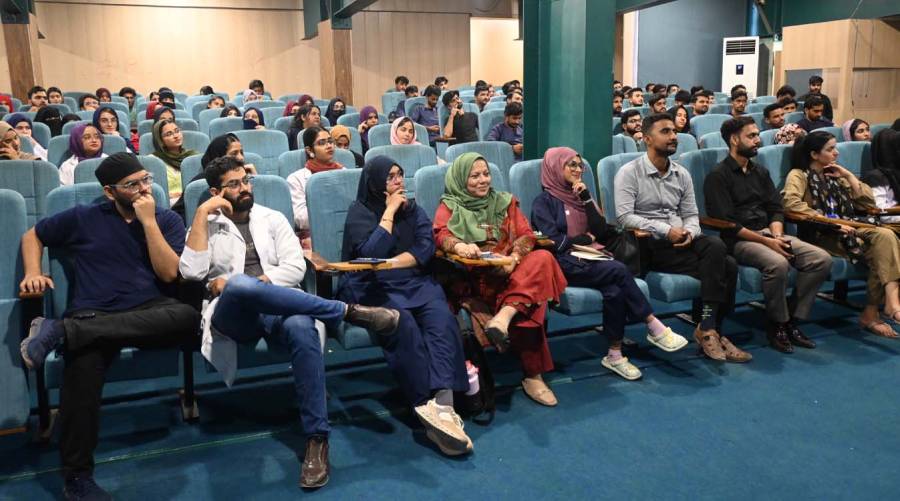
An important part of the open house was an open dialogue in which faculty members shared their concerns, questions, expectations and challenges surrounding the integration of AI into academic and clinical workflows.
The discussion addressed several issues that are becoming increasingly important as healthcare professionals explore AI-assisted tools, including data privacy, patient confidentiality, plagiarism, research integrity and the reliability of AI-generated information.
These considerations highlighted the need for healthcare educators and professionals to approach AI adoption with an understanding of both its potential benefits and its limitations. While AI tools can assist with information processing, documentation and learning, their outputs require appropriate verification, and their use must remain consistent with ethical and professional responsibilities.
The interactive format also gave the facilitators an opportunity to listen to faculty feedback and consider the practical concerns that may influence the adoption of AI across teaching, research and clinical activities.
AI Facilitation Cell outlines plans for practical workshops
The open house also outlined a roadmap for the AI Facilitation Cell and its upcoming workshop series, with plans to provide structured, practical learning opportunities tailored to the needs of healthcare professionals.
The proposed workshops are intended to help participants progress from foundational AI awareness towards more focused applications across clinical practice, research, academic learning, documentation, presentations and digital content creation.
By addressing different areas of professional practice, the initiative aims to make AI learning more accessible and relevant to faculty members, helping them explore appropriate tools and develop the skills needed to use them effectively.
The planned workshop series also reflects an emphasis on practical learning rather than technology awareness alone. Participants are expected to gain opportunities to explore how AI can support their work while recognising the importance of human oversight, critical evaluation and responsible implementation.
‘AI should be a co-pilot, not the clinician’
A central message of the session was that artificial intelligence should complement professional expertise rather than replace it.
The principle that AI should be a “co-pilot, not the clinician” underscored the importance of retaining human responsibility for clinical decisions. Technology may assist healthcare professionals in managing information, preparing documentation and supporting learning, but it must not displace clinical judgment, critical thinking or professional accountability.
For medical and dental education, this distinction is particularly important as students and faculty explore AI-assisted research, academic writing, presentations and other learning activities. Responsible use requires users to evaluate AI-generated information rather than accept it without scrutiny.
The session's guiding message — “Know it. Use it. Verify it. Own the decision.” — captured this approach, placing knowledge, practical application, verification and individual accountability at the centre of AI adoption.
Building an AI-aware academic environment at LCMD
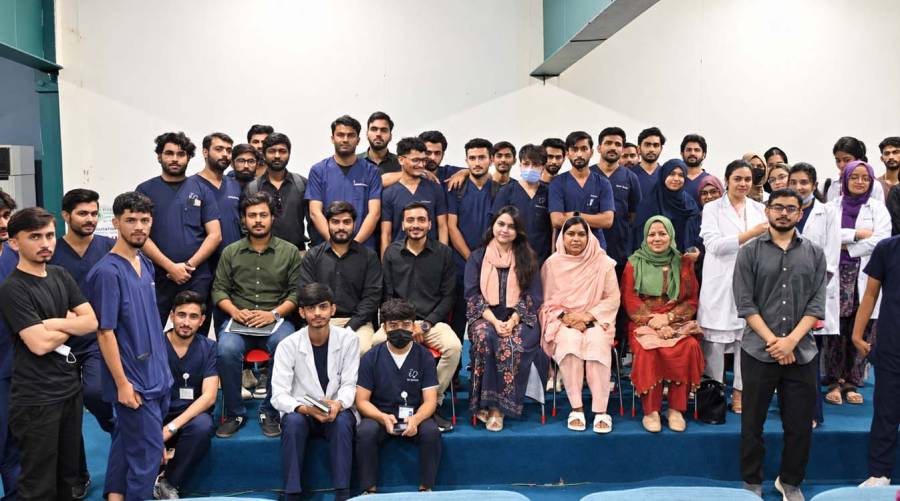
The open house marked a step in LCMD's efforts to develop an AI-aware and future-ready academic environment through faculty engagement, practical demonstrations and plans for structured training.
By combining discussion of real-world applications with attention to privacy, ethics and research integrity, the initiative sought to make AI integration responsive to the needs and concerns of healthcare educators and professionals.
The planned activities of the AI Facilitation Cell are expected to provide a framework for continued learning as AI tools become more prominent in healthcare practice, research and education.
For the medical and dental education community, the broader challenge is not simply to adopt new technologies, but to understand where they can add value, recognise their limitations and ensure that their use strengthens — rather than weakens — professional standards and human decision-making.
Stay connected with Dental News Pakistan
CLICK HERE TO FOLLOW Dental News Pakistan on WhatsApp for the latest updates on dental education, clinical innovation, healthcare technology, research and professional development.