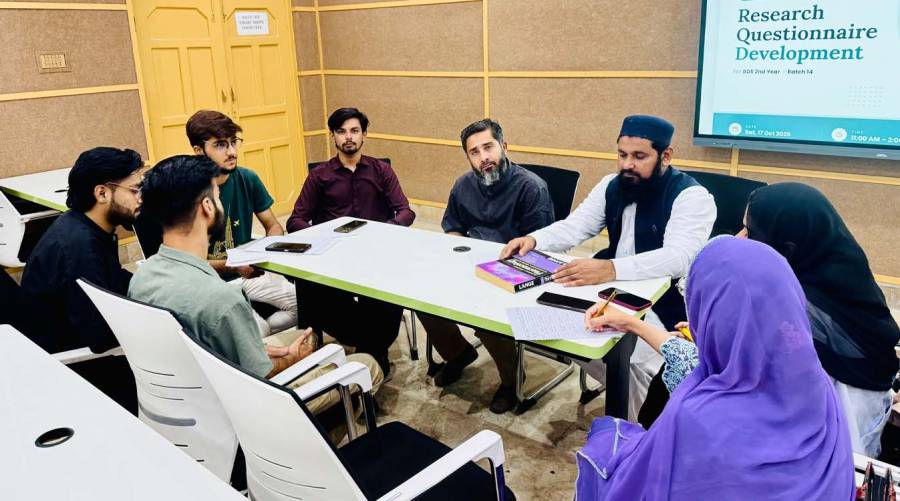
LARKANA: Turning a research idea into questions that produce meaningful, reliable data is an essential skill for future dental professionals. At Bibi Aseefa Dental College (BADC), Larkana, BDS students explored this process during a seminar on research questionnaire development organised by the Department of Community Dentistry.
The seminar introduced students to the fundamentals of designing sound research questionnaires, helping them understand how to translate research objectives into clear, focused questions and select appropriate response formats for collecting information.
Prof. Dr. A. Bari Memon, Chairperson of the Department of Community Dentistry, and Dr. Nadeem H. Jatoi, Consultant Orthodontist, facilitated the session. They guided students through key considerations in questionnaire design and discussed how the quality of questions can influence the usefulness of research findings.
From research objectives to clear questions
A central focus of the seminar was learning how to turn research objectives into questions that respondents can understand and answer accurately. The facilitators discussed the selection of suitable question types and response formats, along with common wording errors that can introduce confusion or affect the quality of collected data.
Students were also introduced to three important elements of questionnaire development: validity, reliability and pre-testing.
Validity concerns whether a questionnaire measures what it is intended to measure, while reliability relates to the consistency of the results it produces. Pre-testing helps identify unclear wording, practical difficulties and other problems before a questionnaire is used for formal data collection.
These principles are particularly relevant to undergraduate dental research, where students must develop the ability to plan studies, gather information systematically and interpret findings responsibly.
Interactive discussion connects research methods with student projects
The session encouraged active student participation, with an interactive discussion giving attendees an opportunity to raise questions about questionnaire design and the planning of their own research projects.
By addressing students’ queries, the facilitators helped clarify how research objectives, question wording and response choices fit together during the development of a research instrument.
For BDS students preparing to undertake academic research, understanding these fundamentals can help them approach data collection more carefully and recognise the importance of using well-designed tools in their studies.
The seminar concluded with the distribution of certificates of participation to the students by the facilitators.
The activity highlighted the role of research-methods education in undergraduate dental training, equipping students with foundational knowledge they can apply as they progress towards research projects and evidence-informed dental practice.
Stay connected with Dental News Pakistan
CLICK HERE TO FOLLOW Dental News Pakistan on WhatsApp for the latest dental education updates, research developments, professional opportunities and important news from Pakistan’s dental community.