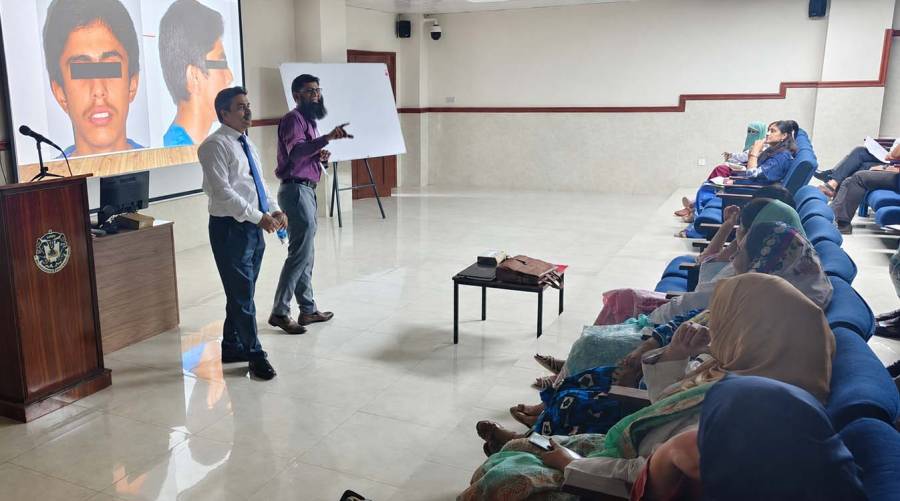
LAHORE: Orthodontic treatment goes far beyond simply straightening teeth. The challenge becomes considerably greater when clinicians must decide how far orthodontic treatment can address a patient's dental and aesthetic concerns while working within the limitations of the underlying skeletal pattern.
That challenge took center stage at the Department of Orthodontics, Fatima Jinnah Institute of Dental Sciences (FJIDS), where an Orthodontic Symposium and Case-Based Discussion (CBD) session brought together postgraduate residents from Faisalabad, Multan and Lahore.
The academic session focused particularly on orthodontic camouflage, giving postgraduate trainees an opportunity to examine clinical cases and discuss the treatment-planning decisions that can make such cases particularly demanding.
Beyond simply aligning the teeth
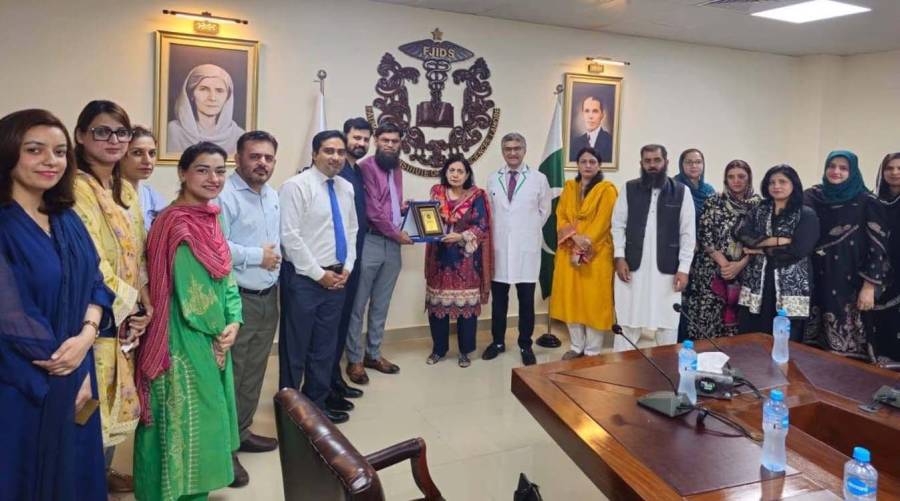
Orthodontic camouflage involves using controlled tooth movement to improve dental relationships and facial appearance in patients with certain underlying skeletal discrepancies. In appropriately selected cases, orthodontic treatment may offer a non-surgical approach to improving the patient's occlusion and appearance.
But deciding whether camouflage is appropriate is not always straightforward.
The clinician must consider the relationship between the teeth and jaws, facial aesthetics, occlusion, treatment objectives and the limitations of tooth movement. These considerations make diagnosis and treatment planning particularly important—and provide fertile ground for case-based postgraduate learning.
At FJIDS, these clinical challenges were brought into focus through a dedicated case series and interactive discussion.
Expert insights put difficult cases under the microscope
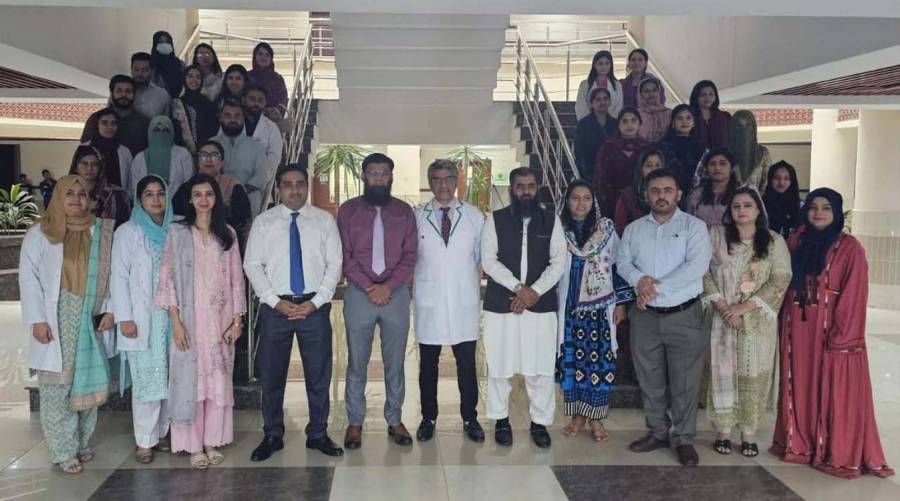
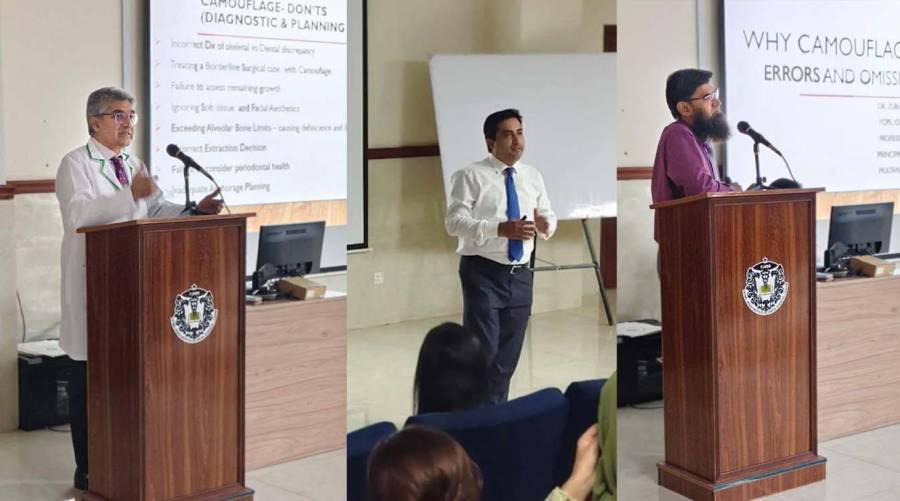
Prof. Zubair Hassan, Principal NID, and Dr Azeem, Head of the Department of Orthodontics at FJIDS, shared clinical insights and practical tips during the session.
A case series focusing on orthodontic camouflage formed a central component of the academic proceedings, allowing the discussion to move beyond theoretical concepts and into the practical considerations involved in managing challenging orthodontic presentations.
For postgraduate residents, this type of expert-led discussion can offer an important perspective on how experienced clinicians approach treatment planning when different clinical considerations have to be balanced.
And the learning did not stop with faculty presentations.
FJIDS residents bring their cases to the discussion
FJIDS postgraduate residents Dr Namra and Dr Monam presented clinical cases during the session, with facilitation by Assistant Professor Dr Nayha Enver.
The resident-led presentations added a practical dimension to the symposium, allowing cases to become the starting point for clinical discussion and deliberation.
Rather than treating case presentations as a one-way academic exercise, the CBD format created an opportunity to examine clinical reasoning, treatment considerations and the challenges that emerge when orthodontic principles are applied to individual patients.
The participation of residents from Faisalabad, Multan and Lahore further broadened the academic exchange, bringing postgraduate trainees from different locations into the same orthodontic learning environment.
Why camouflage cases can challenge orthodontic trainees
The appeal of orthodontic camouflage lies partly in its ability to address selected skeletal discrepancies through orthodontic tooth movement rather than surgical correction. However, its limitations are equally important.
A treatment plan that works well for one patient may not be appropriate for another because orthodontic camouflage depends heavily on the severity and nature of the underlying discrepancy, dental compensation, facial aesthetics and the patient's treatment objectives.
That is why case-based learning can be particularly valuable in postgraduate orthodontic education.
Working through real clinical scenarios allows residents to think beyond isolated diagnostic findings and consider how multiple factors interact before arriving at a treatment strategy.
The FJIDS session placed this clinical reasoning at the heart of the discussion.
From classroom concepts to clinical reasoning
The symposium demonstrated how postgraduate dental education can move beyond conventional lectures by combining expert guidance with resident-led clinical presentations.
With Prof. Zubair Hassan and Dr Muhammad Azeem providing expert input, Dr Namra and Dr Monam presenting cases, and Dr Nayha Enver facilitating the discussion, the session created a collaborative environment for examining orthodontic camouflage from a practical clinical perspective.
For the participating residents, the value of the session extended beyond learning another orthodontic technique. It offered an opportunity to see how treatment decisions are questioned, discussed and refined when confronted with individual clinical cases.
And that is perhaps the most important lesson behind the session: orthodontics is not simply about moving teeth—it is about knowing when, why and how those movements can achieve a realistic treatment goal.
The FJIDS symposium used that principle to turn orthodontic camouflage from a textbook concept into a case-based conversation about clinical judgment, treatment planning and the realities of postgraduate orthodontic practice.
Stay connected with Dental News Pakistan
CLICK HERE TO FOLLOW the official Dental News Pakistan WhatsApp Channel for the latest PMDC updates, dental education news, student achievements, professional developments, research breakthroughs and important regulatory developments affecting Pakistan's dental community.