
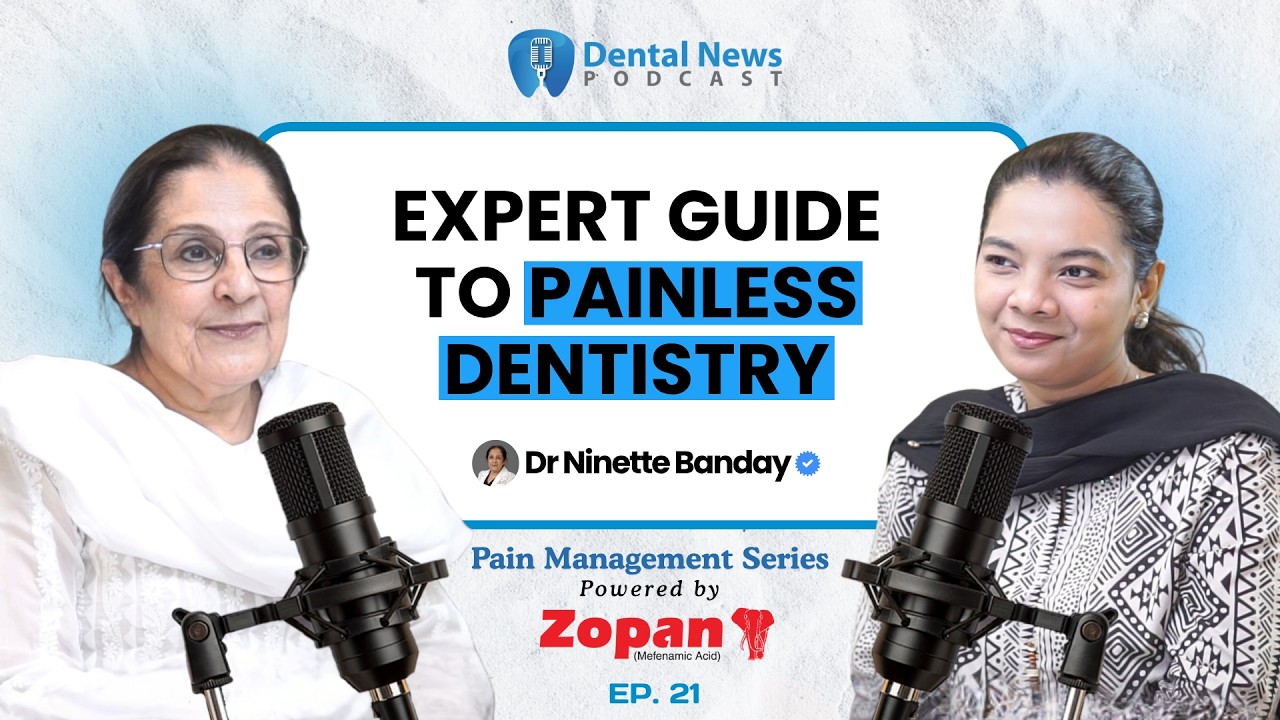
As Pakistan embarks on one of the biggest changes in its dental education system with the introduction of a national five-year Bachelor of Dental Surgery (BDS) programme, Harvard-trained clinician and educator Dr Ninette Banday believes the country's next priority should extend beyond undergraduate education.
Speaking on the Dental News Podcast, Dr Banday argued that while strengthening the BDS programme is important, Pakistan must now invest more aggressively in postgraduate dental education by expanding specialist training pathways, residency opportunities, faculty development and mentorship if it aims to build a stronger and more sustainable dental workforce.
"Instead of developing more undergraduate programs, I think we should go in and develop more postgraduate programs," she said during the podcast's Pain Management Series, powered by Zopan.
Her remarks come at a particularly significant moment. The Pakistan Medical and Dental Council (PMDC) has recently approved a national framework extending the BDS programme to five academic years, followed by one year of structured House Job/Internship, while the University of Health Sciences (UHS) Lahore has already implemented its Five-Year Modular Integrated BDS Curriculum for new admissions.
These developments place greater emphasis on competency-based education, integrated learning, early clinical exposure, simulation training, ethics, patient safety and research. Dr Banday, however, believes that strengthening undergraduate education should be matched by comparable investment in what follows graduation.
According to her, the journey to becoming a specialist cannot be achieved through undergraduate education alone.
She explained that postgraduate training is where dentists learn to manage complex cases, refine clinical judgement, recognise professional limitations, make appropriate referrals, handle complications and eventually develop into educators and mentors themselves.
Drawing on decades of academic and clinical experience, Dr Banday reflected on her role in helping establish FCPS dental training pathways in Pakistan, including specialist programmes at Aga Khan University. She recalled how postgraduate dental education gradually evolved from relatively short training models into structured residency programmes supported by defined curricula, competency-based assessments and formal examinations.
Yet she also pointed to challenges that have persisted over the years.
She noted that many dentists who successfully completed the initial stages of specialist examinations often struggled to obtain accredited residency positions because of limited training capacity. Institutions also faced difficulties related to faculty availability, curriculum development, assessment methods and clinical supervision.
Another issue, she observed, has been the availability of committed academic faculty.
Universities have historically faced challenges in adequately compensating dental educators, leading many faculty members to balance academic responsibilities with private clinical practice. While understandable, Dr Banday emphasized that postgraduate residents benefit most from supervisors who are consistently available to guide clinical decision-making, provide feedback and mentor trainees throughout their specialist education.
She also stressed that strengthening postgraduate education requires much more than simply increasing the number of residency programmes.
High-quality specialist training depends on well-equipped institutions, sufficient patient volumes, structured curricula, experienced supervisors, protected teaching time and a culture of mentorship that prepares future clinical leaders rather than merely awarding specialist qualifications.
Her observations also add an important dimension to Pakistan's current debate over dental education.
As regulators and universities focus on implementing the new five-year BDS programme, Dr Banday's remarks raise another question: What opportunities await graduates after completing an enhanced undergraduate degree?
A stronger BDS curriculum can produce better-prepared general dentists, but specialist care in disciplines such as orthodontics, prosthodontics, periodontology, operative dentistry, endodontics and oral and maxillofacial surgery continues to depend on robust postgraduate education.
Dr Banday believes postgraduate programmes should also cultivate leadership, communication, professionalism, ethics, emotional intelligence, research capability and lifelong learning, producing specialists who can teach, supervise, conduct research and help shape future standards of care.
Her international experience reinforces that perspective.
After graduating from Liaquat Medical and Dental College, Dr Banday pursued advanced education at the Harvard School of Dental Medicine and Harvard School of Public Health, completed a General Practice Residency at Brigham and Women's Hospital in Massachusetts and participated in research at the Dana-Farber Cancer Institute. She later contributed to healthcare leadership, clinical governance and specialist implantology programmes in the United Arab Emirates, where she witnessed growing demand for specialist expertise across modern healthcare systems.
Importantly, she emphasized that Pakistani dentists do not necessarily need to pursue postgraduate education abroad. Pakistan already has recognized FCPS training pathways that can produce highly competent specialists if they continue to receive institutional support and investment.
Her message is therefore not an argument against strengthening undergraduate dental education.
Instead, it is a call for policymakers, universities and professional organizations to ensure that improvements in undergraduate education are matched by equal commitment to postgraduate specialist training, faculty development and mentorship.
As Pakistan begins implementing its five-year BDS framework, Dr Banday's observations shift the national conversation beyond curriculum duration toward a broader question: Can the country build a complete educational pathway that prepares dentists not only to graduate, but to become specialists, researchers, educators and future leaders of the profession?
The answer, she suggests, may ultimately shape the future quality of dental care, academic dentistry and specialist services in Pakistan.
⇒ CLICK HERE TO WATCH the complete Dental News Podcast with Dr Ninette Banday for her insights on postgraduate dental education, FCPS training, pain management, dental anxiety, ethical practice, implant dentistry and lifelong learning.