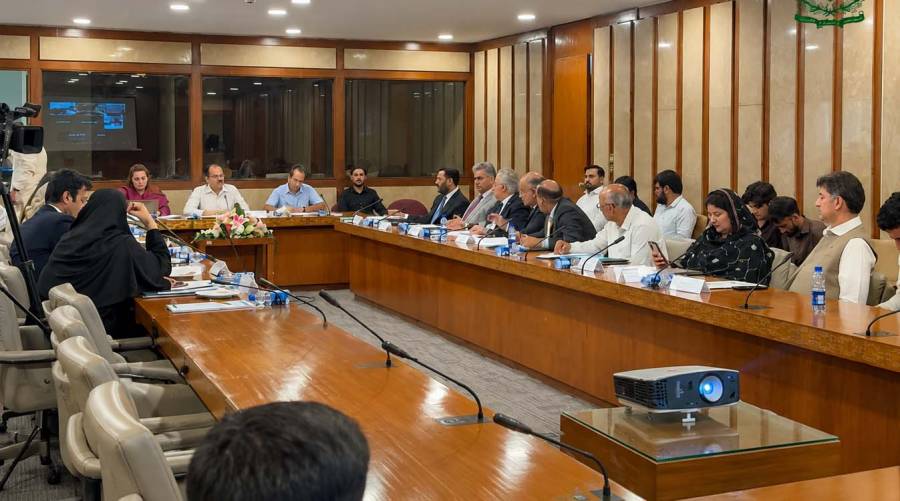
ISLAMABAD: Pakistan’s private medical college fee structure and the growing number of vacant MBBS and BDS seats have come under fresh parliamentary scrutiny, with the National Assembly Standing Committee on Health directing regulators to investigate why approved seats remain unfilled.
The issue was discussed during the committee’s latest meeting chaired by Dr Mahesh Kumar Malani, where members reviewed private medical college fees, vacant seats, admission policies and preparations for MDCAT 2026.
The scrutiny comes against the backdrop of 743 vacant medical and dental seats previously cited in parliamentary proceedings, raising questions about whether affordability, admission policies, institutional differences and changing student interest are contributing to the inability of some colleges to fill their approved capacity.
Why 743 vacant seats matter
Vacant seats have become an increasingly visible issue in Pakistan’s medical and dental education system.
In June, a Senate health subcommittee was informed that 743 seats were vacant across medical and dental colleges. The committee noted that the majority of the vacancies were in dental colleges and linked the issue to broader concerns surrounding the admissions framework, education costs and the regulatory system.
The problem has also been evident in individual provinces. Earlier this year, Punjab’s private medical colleges were reported to have 426 vacant MBBS seats after the fifth and final selection list, despite 4,350 seats being available across 33 institutions. In addition, 317 students who had initially secured admission subsequently cancelled their enrolment.
In Sindh, around 350 MBBS seats in private institutions were also reported vacant, prompting the Shaheed Mohtarma Benazir Bhutto Medical University to approach PMDC over the issue.
The repeated appearance of vacant seats has therefore shifted the debate from simply filling admissions capacity to asking why students are not taking up seats that have already been approved.
Committee asks why approved seats remain vacant
The National Assembly committee has now directed PMDC to inspect private medical colleges with vacant seats and submit a report identifying the reasons for the vacancies.
The committee stressed that the issue should be properly investigated before further policy decisions are made. It also expressed concern over delays in receiving information requested during its previous meeting and directed that the report be submitted within one month.
The investigation is significant because the existence of vacant seats does not necessarily point to a single cause.
The health minister told the committee that vacancies could not be attributed solely to college fees or MDCAT eligibility percentages. The committee was also informed that declining interest in medical education itself needed to be examined.
Private medical college fees face closer scrutiny
Fees were another major issue before the committee.
The health minister told members that several colleges had sought fee increases and that universities could not independently increase their fees. Of 61 medical colleges considered, 35 had qualified under the prescribed criteria.
The committee sought details explaining and supporting the fee structures of those 35 institutions, including audited financial statements. PMDC was also asked to provide details of institutions that had not qualified but were nevertheless charging higher fees and displaying those fees on their websites. PMDC said notices had been issued to non-compliant institutions and monitoring was under way.
The committee said any fee increase should be supported by clear criteria and credible evidence, including educational standards, faculty strength, infrastructure and audited financial information.
The scrutiny follows earlier parliamentary concern over private medical and dental college fees. In July, the National Assembly committee had discussed a proposed annual tuition range of Rs1.8 million to Rs2.5 million, with private colleges required to justify their fee structures and undergo third-party audits to determine the actual per-student cost of medical education.
PMDC had also previously reaffirmed that the notified fee structure must be followed and said excessive fees could be refunded or adjusted against future payments.
Are fees really the reason students are leaving seats empty?
This is emerging as one of the most important questions in the debate.
At first glance, high private-college fees appear to offer an obvious explanation for vacant seats. Private medical education requires a substantial financial commitment, and families increasingly have to weigh the cost of a medical degree against future employment and postgraduate training prospects.
However, the latest committee discussion points to a more complicated picture.
According to Health Minister Mustafa Kamal, some colleges charging around Rs3.5 million annually reportedly had hardly any vacant seats, while institutions charging around Rs1.8 million had a number of vacancies. The observation prompted the minister to question whether fees alone explain the uneven demand between institutions.
That comparison adds another dimension to the debate: students may be evaluating not simply the price of a medical degree, but also a college’s reputation, perceived quality, clinical exposure, career prospects and future value.
Earlier reporting from the medical education sector has similarly shown a sharp difference between institutions, with some private colleges closing admissions at much higher merit while others struggled to attract students even at considerably lower thresholds.
PMDC has already relaxed admission rules to fill seats
The vacant-seat problem has previously prompted regulatory intervention.
In February, PMDC extended the admission deadline for the 2025–26 session to March 31 after institutions continued to face difficulty filling seats.
In April, PMDC subsequently allowed a one-time reduction of up to 3 percentage points in the MDCAT qualifying threshold for vacant seats, bringing the effective minimum to 52% for MBBS and 47% for BDS where the existing eligible pool had been exhausted.
The move followed an earlier one-time relaxation in 2025 that was also introduced to prevent seat wastage.
The repeated interventions have intensified debate over whether temporary admission relaxations are addressing the underlying problem or simply allowing colleges to fill capacity without resolving deeper issues surrounding affordability, demand, institutional quality and graduate career pathways.
Committee weighs access against merit
The committee also discussed whether MDCAT eligibility requirements should be reconsidered to broaden access to medical education.
At the same time, members acknowledged the importance of maintaining academic standards. Lowering the entry threshold may help fill vacant seats, but students admitted with weaker academic preparation could face difficulties later in medical education and professional examinations.
This places policymakers in a difficult position: empty seats represent wasted educational capacity, but filling them cannot come at the expense of academic quality and patient safety.
The committee has therefore sought further evidence before supporting additional changes.
MDCAT 2026 also moves into focus
The committee reviewed PMDC’s preparations for MDCAT 2026, which has now been rescheduled from August 16 to September 20, 2026.
PMDC said the revised date was intended to ensure a transparent, secure and well-organised examination and to provide additional relief to candidates.
The committee had earlier been briefed that the MDCAT would comprise 180 MCQs, carry no negative marking and use a 50% MDCAT weighting in the admission formula, alongside 10% Matriculation and 40% Intermediate marks.
The examination’s rescheduling adds another layer to an already closely watched admission cycle, particularly as universities and colleges prepare for the next round of MBBS and BDS admissions while policymakers continue examining why seats remained vacant during the previous cycle.
The bigger question for Pakistan’s medical education system
The parliamentary scrutiny is ultimately moving beyond the question of how many seats are empty.
It is asking whether Pakistan has the right balance between medical college capacity, student demand, affordability, admission standards, institutional quality and future workforce requirements.
The country has continued to expand medical education capacity, yet some institutions are struggling to attract enough students. At the same time, families face high costs for private education and students are increasingly considering employment prospects and postgraduate training opportunities before committing to a five-year professional degree.
The committee’s decision to investigate vacant seats and scrutinise fee structures could therefore provide important evidence for future admission and regulatory policies.
For students and parents, the outcome could be equally significant. Any future changes to private medical college fees, vacant-seat policies or MDCAT eligibility could directly affect who can enter MBBS and BDS programmes, how much they pay and how admission capacity is distributed across institutions.
For now, the committee has asked PMDC to provide answers rather than simply introduce another temporary relaxation.
And with 743 vacant seats having already become a parliamentary talking point, the question facing Pakistan’s medical education regulators is becoming harder to ignore: if medical college seats are available but students are not taking them, what exactly is driving them away?
Stay connected with Dental News Pakistan
CLICK HERE TO FOLLOW the official Dental News Pakistan WhatsApp Channel for the latest student achievements, PMDC updates, dental education news, scientific competitions, research breakthroughs and exclusive coverage from Pakistan's dental community.