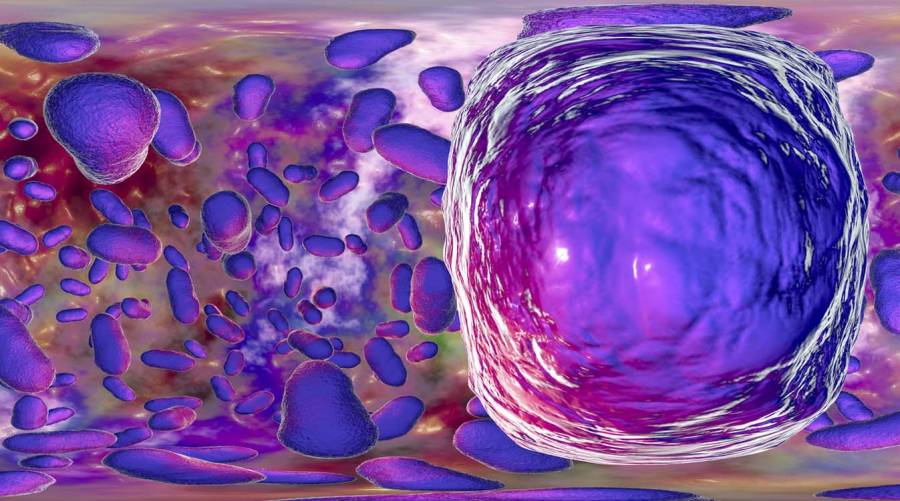
NAGOYA, Japan: A cancer treatment technique adapted by Japanese scientists could open a new avenue for treating gum disease, after researchers successfully used egg yolk-derived antibodies and near-infrared light to destroy a major periodontal pathogen and reduce bone loss around teeth in mice.
Researchers at Nagoya University have developed an experimental treatment that selectively targets Porphyromonas gingivalis (P. gingivalis), a bacterium strongly associated with periodontitis, without broadly eliminating the beneficial microorganisms that help maintain a healthy oral environment.
The technique, adapted from near-infrared photoimmunotherapy originally developed to attack cancer cells, combines specially produced antibodies obtained from chicken egg yolks with a light-sensitive dye. When activated by near-infrared light, the combination damages and kills the targeted bacteria.
In laboratory experiments, the treatment eliminated P. gingivalis without causing observed damage to the human cells tested. In mice with experimentally induced periodontitis, it significantly reduced alveolar bone loss and helped shift the oral microbiome toward a healthier bacterial balance.
The findings, published on June 2, 2026, in the peer-reviewed Journal of Translational Medicine, suggest that techniques developed for cancer research could have applications in precision periodontal treatment.
However, the researchers emphasise that the approach remains experimental and has not yet been established as safe or effective for treating gum disease in humans.
From targeting cancer cells to fighting periodontal bacteria
The research builds on a therapeutic concept originally designed to identify and destroy specific cancer cells while limiting damage to surrounding healthy tissue.
Known as near-infrared photoimmunotherapy, the method uses antibodies linked to a light-sensitive compound. The antibodies recognise particular targets, while exposure to near-infrared light activates the compound and damages the targeted cells.
Scientists at Nagoya University adapted this principle for an entirely different challenge: selectively eliminating bacteria responsible for disrupting the oral microbial environment.
Their modified technique is called near-infrared photo-antibacterial targeting therapy (NIR-PAT²).
Instead of directing the antibody-based treatment toward cancer cells, the researchers engineered it to recognise P. gingivalis, one of the most extensively studied microorganisms associated with periodontal disease.
The difference is significant.
Conventional antimicrobial approaches often act against a broad range of microorganisms. The experimental therapy aims to target an important disease-associated bacterial species more precisely.
This could eventually help address a persistent challenge in periodontal care: controlling harmful microorganisms without unnecessarily disturbing the wider bacterial community in the mouth.
Why targeting P. gingivalis matters
Periodontitis is a chronic inflammatory disease that damages the gums, periodontal ligament and alveolar bone supporting teeth.
The condition develops through complex interactions between microbial communities and the body's immune response. If inadequately managed, it can cause progressive destruction of supporting tissues, tooth mobility and eventual tooth loss.
Although many microorganisms are involved in periodontitis, P. gingivalis occupies a particularly important position.
Researchers describe it as a keystone pathogen because it can influence the behaviour of other oral microorganisms and contribute to the disruption of the normal microbial balance.
This disruption, known as microbial dysbiosis, can encourage inflammatory processes associated with periodontal tissue damage.
A healthy mouth contains a diverse community of microorganisms, many of which coexist without causing disease.
The challenge is therefore not simply to eliminate bacteria, but to control disease-associated microbial activity while preserving a balanced oral ecosystem.
Broad-spectrum antimicrobial treatments can affect both harmful and health-associated organisms, potentially altering the microbial environment beyond the intended target.
The Nagoya University team wanted to determine whether a more selective approach could interrupt this process.
Egg yolk antibodies become the key to the experimental treatment
One of the study's most unusual features is its use of antibodies derived from chicken egg yolks.
The researchers used immunoglobulin Y (IgY), an antibody naturally transferred from hens into their eggs.
To produce antibodies capable of recognising P. gingivalis, hens were immunised against the bacterium. The researchers subsequently extracted and purified IgY antibodies from their egg yolks.
These antibodies were then combined with a light-sensitive dye known as IR700, creating a targeted antibody-dye complex.
When the complex encounters P. gingivalis, the antibody binds to the bacterium.
Exposure to near-infrared light then activates the attached dye, producing physical damage to the bacterial membrane and killing the microorganism.
Importantly, this does not mean ordinary egg yolk can treat periodontitis.
The experimental approach relies on specifically produced and purified antibodies, a chemically linked light-sensitive compound and controlled near-infrared illumination.
The researchers believe IgY could offer advantages for future antimicrobial technologies because antibodies can be obtained from eggs in substantial quantities without requiring invasive collection methods.
However, the clinical practicality and overall cost of the complete treatment system remain to be established.
Laboratory tests show how the technique destroys harmful bacteria
The research team examined the treatment's mechanism using laboratory cultures, microscopic imaging and tests involving human cells.
The antibody-dye complex successfully attached to P. gingivalis.
When exposed to near-infrared light, the targeted bacteria were killed.
Microscopic examination revealed that the treatment produced small perforations in the bacterial membrane while leaving much of the bacterial structure intact.
This finding distinguished the technique from conventional antimicrobial photodynamic therapy (aPDT), another light-based approach used in antimicrobial research.
In the laboratory comparison, aPDT caused more extensive bacterial disintegration.
The distinction may be important because destroying Gram-negative bacteria can release components of their outer membranes, including lipopolysaccharide (LPS).
LPS is an endotoxin capable of stimulating inflammatory responses, making its release potentially relevant to periodontal inflammation.
The researchers found that NIR-PAT² released significantly less LPS than conventional antimicrobial photodynamic therapy under the experimental conditions.
They also reported that the treatment did not damage the human gum cells tested.
These findings suggest that the technique may offer greater bacterial selectivity and a potentially more favourable inflammatory profile than certain conventional antimicrobial methods.
Nevertheless, laboratory findings alone cannot establish how the treatment will behave in human periodontal pockets or complex dental biofilms.
Experimental treatment significantly reduces bone loss in mice
The researchers then evaluated the technique in mice with experimentally induced periodontitis.
The animal experiments were designed to assess whether targeting P. gingivalis could influence the destruction of alveolar bone, one of the defining consequences of advanced periodontal disease.
The results showed that animals receiving NIR-PAT² experienced significantly less alveolar bone resorption than mice with untreated experimental periodontitis.
This finding suggests that the selective antibacterial treatment may help limit periodontal tissue destruction in the experimental model.
The researchers also investigated changes in the oral microbiome by analysing bacterial populations in saliva.
The treatment substantially reduced bacteria belonging to the genus Porphyromonas.
At the same time, the relative abundance of Streptococcus, a genus containing several microorganisms associated with oral health, remained closer to that observed in healthy mice.
By comparison, mice treated with conventional antibiotics or antimicrobial photodynamic therapy showed lower levels of Streptococcus.
The results suggest that the experimental treatment may help preserve certain health-associated bacterial populations while reducing an important periodontal pathogen.
However, the researchers described the microbial changes as a partial shift toward a healthier profile, rather than complete restoration of the oral microbiome.
Preserving beneficial bacteria could become a major advantage
The potential importance of the study extends beyond its ability to kill P. gingivalis.
The researchers are investigating whether periodontal disease can be managed through more precise manipulation of microbial communities rather than broad antimicrobial elimination.
Kazuhide Sato, a lecturer at Nagoya University and one of the study's corresponding authors, highlighted the limitations of conventional approaches in the university's research announcement.
Sato explained that treatments such as antibiotics and antimicrobial photodynamic therapy can eliminate both harmful and beneficial oral microorganisms, disturbing the broader oral microbial ecosystem.
The experimental treatment was designed to address this problem by directing antibacterial activity toward a selected pathogen.
If future studies confirm that such selectivity can be maintained safely in humans, the approach could potentially complement existing periodontal treatment strategies.
For periodontists, this is particularly relevant because disease progression involves not only individual microorganisms but also microbial interactions and the host inflammatory response.
A therapy capable of reducing destructive bacterial activity while preserving health-associated species could represent a meaningful development in periodontal disease management.
The current findings, however, do not establish that all beneficial oral bacteria are unaffected. Further research is necessary to determine whether less abundant or unmeasured microbial species might also be influenced by treatment.
Who conducted the research?
The study was conducted by a multidisciplinary Japanese research team bringing together expertise in oral and maxillofacial surgery, biomedical engineering, immunology and advanced diagnostic imaging.
Hiroshi Maruyama, the study's first author, is affiliated with the Department of Oral and Maxillofacial Surgery at Nagoya University Hospital and Nagoya University Graduate School of Medicine.
The research also involved Professor Hideharu Hibi, of Nagoya University's oral and maxillofacial surgery departments.
Kazuhide Sato, a lecturer associated with Nagoya University's advanced analytical and medical engineering research, and Kiyoshi Sakai, of the Department of Oral and Maxillofacial Surgery at Nagoya University Hospital, served as corresponding authors.
Other members of the research team included Hirotoshi Yasui and Ryu Okada, affiliated with Nagoya University's Advanced Analytical and Diagnostic Imaging Center, and Li Xinheng, of the Department of Oral and Maxillofacial Surgery.
The team also included Koji Umeda, Shofiqur Rahman and Van Sa Nguyen, affiliated with the Immunology Research Institute at EW Nutrition Japan in Gifu.
The collaboration reflects the increasingly multidisciplinary nature of dental research, particularly in developing targeted therapies that combine microbiology, immunology and medical technologies.
Can the technique be used in dental clinics?
Despite the encouraging findings, the researchers acknowledge several important barriers before the approach could be considered for routine periodontal treatment.
First, periodontitis is a polymicrobial disease.
Although P. gingivalis can play a central role in disrupting the oral microbiome, numerous bacterial species contribute to periodontal disease.
Targeting one microorganism may therefore be insufficient to manage the entire disease process.
Second, the treatment requires both the antibody-dye complex and near-infrared light to reach the intended bacterial targets.
Delivering these components into deep periodontal pockets and dense subgingival biofilms may prove difficult.
Light penetration can also be reduced by gingival tissue and anatomical limitations, potentially leaving some bacteria beyond the effective treatment area.
Third, the development of appropriate clinical light-delivery devices and practical treatment protocols remains necessary.
Although IgY antibodies may be relatively economical to produce, equipment requirements, clinical training and overall treatment costs could influence future adoption.
The research also had limitations in its microbiome analysis, which used a small number of biological samples. The researchers therefore cautioned against drawing definitive conclusions about the long-term effects on the oral microbial community.
No human clinical benefit has yet been demonstrated by this study.
Artificial intelligence could help scientists target more bacteria
The research team plans to explore whether the technique can be expanded beyond P. gingivalis.
Because several microorganisms contribute to periodontal disease, the researchers intend to use artificial intelligence (AI) to analyse publicly available oral microbiome data and identify other important bacterial targets.
Such analysis could help determine which combinations of microorganisms are most relevant to disease development and progression.
The scientists are also considering whether multiple antibodies could eventually be combined to target different periodontal pathogens.
This approach could support the development of more comprehensive precision therapies capable of addressing the complex microbial interactions associated with periodontitis.
Rather than relying on a single broad antimicrobial effect, future treatments might be designed to target specific bacterial populations according to their role in disease.
These possibilities remain research objectives, but the findings provide an early demonstration of how targeted light-based technology might influence periodontal microbial communities.
What does this discovery mean for periodontal treatment?
For dental professionals and researchers, the Nagoya University study offers an intriguing possibility: a therapy developed from cancer-targeting technology could eventually help control periodontal infections more selectively.
Its greatest potential may lie in combining antibacterial action with the preservation of health-associated microorganisms.
However, the findings should not be interpreted as evidence that the technique is ready to replace conventional periodontal treatment.
Current evidence-based management continues to depend on professional diagnosis, plaque control, appropriate subgingival instrumentation, risk-factor management and supportive periodontal care.
The experimental antibody-based method would require further preclinical investigation and carefully designed human studies before any clinical recommendations could be made.
For patients, the research offers reason for scientific optimism, but not an immediately available alternative to established gum disease treatment.
The work also reinforces an important shift in understanding periodontal disease.
Long-term oral health depends not merely on eliminating bacteria, but on maintaining a balanced microbial environment and controlling the inflammatory processes responsible for periodontal tissue destruction.
By adapting a cancer-treatment technique to selectively attack P. gingivalis, the Japanese researchers have demonstrated a potential new direction for investigating these challenges.
Whether this approach eventually becomes a practical treatment for human gum disease remains uncertain, but its ability to reduce bacterial activity and periodontal bone loss in mice provides a foundation for further research.
Stay connected with the future of dentistry
Could technologies originally developed for cancer treatment reshape how dentists manage periodontal infections? Discoveries like these are opening important new discussions about targeted therapies, oral microbiome preservation and precision dentistry.
CLICK HERE TO FOLLOW Dental News Pakistan WhatsApp Channel for evidence-based dental research, emerging treatment technologies, clinical developments and important updates from the world of dentistry.
Because the future of dental care begins with understanding the science shaping tomorrow's treatments.